Sympathetic nervous system sweating is not just a skin issue. It starts with the autonomic nervous system, which includes the sympathetic system and the parasympathetic system. These systems work together to keep the body balanced even when we are not thinking about it. They affect heart rate, heart function, lumbar function, kidneys, blood vessels, stomach, and intestines. That is why sweating cannot be understood as a skin issue alone.
How the autonomic nervous system and sweating connect
The sympathetic system pushes the body into action, while the parasympathetic system is more relaxed and restorative. The sympathetic chain connects with skin, blood vessels, and organs in the body cavity. It runs along both sides of the spine and includes ganglia that help relay signals. Those links help explain why a change in nerve activity can affect sweating in several body areas at once.
How the sympathetic system affects hyperhidrosis
The autonomic nervous system becomes active during stress and danger, which is the classic "fight" or "flight" response. It also supports calmer moments that allow us to "rest" and "digest" when the threat has passed. The system works with the somatic nervous system to support normal internal function throughout the day. In other words, the same body can swing between alertness and recovery depending on what the brain detects.
When danger appears, the sympathetic ganglia widen the lungs for more oxygen, reduce hunger, send blood to the brain, and raise heart rate. Those changes make sense in a crisis because the body is trying to act quickly and stay alive. They also show why stress can feel so physical even when the trigger is social rather than life threatening. For people with hyperhidrosis, that same system can seem to push sweating much harder than it should.
What the sympathetic nervous system looks like
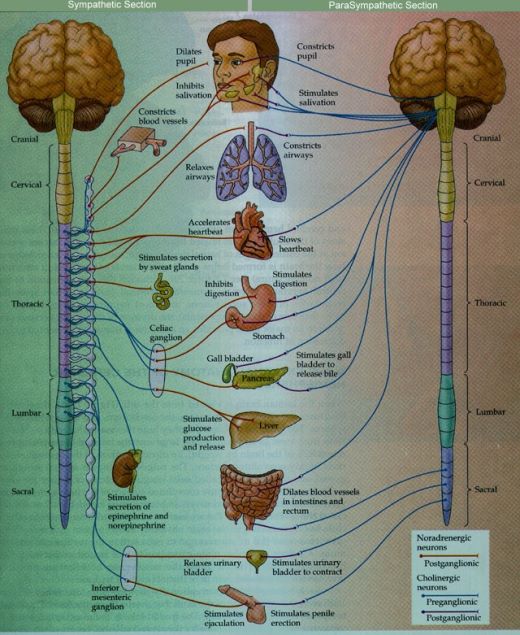
The image above shows the sympathetic nervous system and its inner connections. It also shows how complex the sympathetic chain really is. That complexity matters because treatments that target these nerves are never as simple as they may sound in a short sales pitch. Once you see how much the system controls, it becomes easier to understand why nerve surgery deserves careful thought.
Why this matters in hyperhidrosis treatment
This complexity helps explain why Endoscopic Thoracic Sympathectomy is difficult and why results can vary so much. A procedure that interrupts one part of the sympathetic chain can still affect sweating patterns in other parts of the body. That is one reason many readers on this site urge caution before surgery. It is not a decision to take lightly.
What Our Community Says
Insights drawn from hundreds of reader experiences shared on this site.
"Readers often felt their sweating was tightly linked to the sympathetic nervous system. Stress, meetings, interviews, and sudden social pressure could trigger it within seconds."
- Community member tracking nervous system triggers
"Glycopyrrolate, Robinul, and similar drying medicines were some of the most practical tools mentioned here. People accepted dry mouth more easily than constant sweating."
- Community member using oral medication
"The comments also showed why sympathetic surgery is such a serious decision. Some readers gained relief, but others faced years of compensatory sweating and fatigue."
- Community member affected after surgery
"Several people said they did best with a combination of approaches, such as medication, Drysol, moisture wicking clothing, hydration, and careful planning."
- Community member combining treatments
"A recurring frustration was that general doctors often missed the condition. Readers kept urging each other to find specialists who actually know hyperhidrosis."
- Community member seeking specialist care